NeurIPS 202640th Conference on Neural Information Processing Systems

M-plicits: Neural Implicit Surfaces via Nested Multiscale Residuals

Vinícius da Silva1, Isabelle Melo1, Matheus Bessa1,Guilherme Schardong2, Luiz Schirmer2, André Araújo3, Nuno Gonçalves4, Hélio Lopes1, Alberto Raposo1, Luiz Velho5, Tiago Novello51PUC-Rio · 2Universidade Federal de Santa Maria · 3Google DeepMind · 4University of Coimbra · 5IMPA
Surfaces that stay clean when the data is not.
A neural surface representation whose training bands never see the noise, and the real-time algorithms that fall out of it.
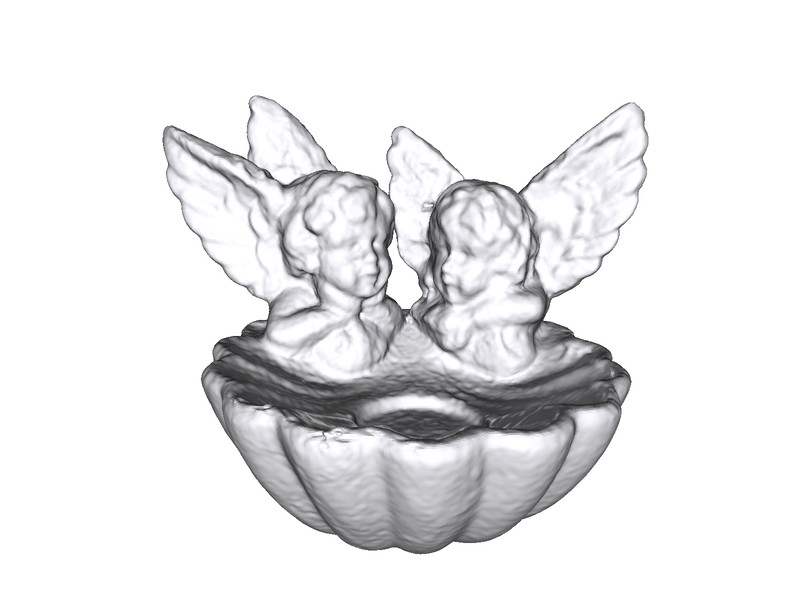
M-plicits reconstruction from a scan with 1% noise: clean surface
iNGP reconstruction from the same noisy scan: noise absorbed into the surface
↔
iNGP — ABSORBS NOISE
M‑PLICITS — FILTERS IT
Drag. Same scan, 1% noise, both methods.
35–180
FPS, real-time sphere tracing
247K
parameters for full detail
1%
input noise, filtered by construction
5×
faster mesh extraction
How it works

Residuals that only ever see the surface.

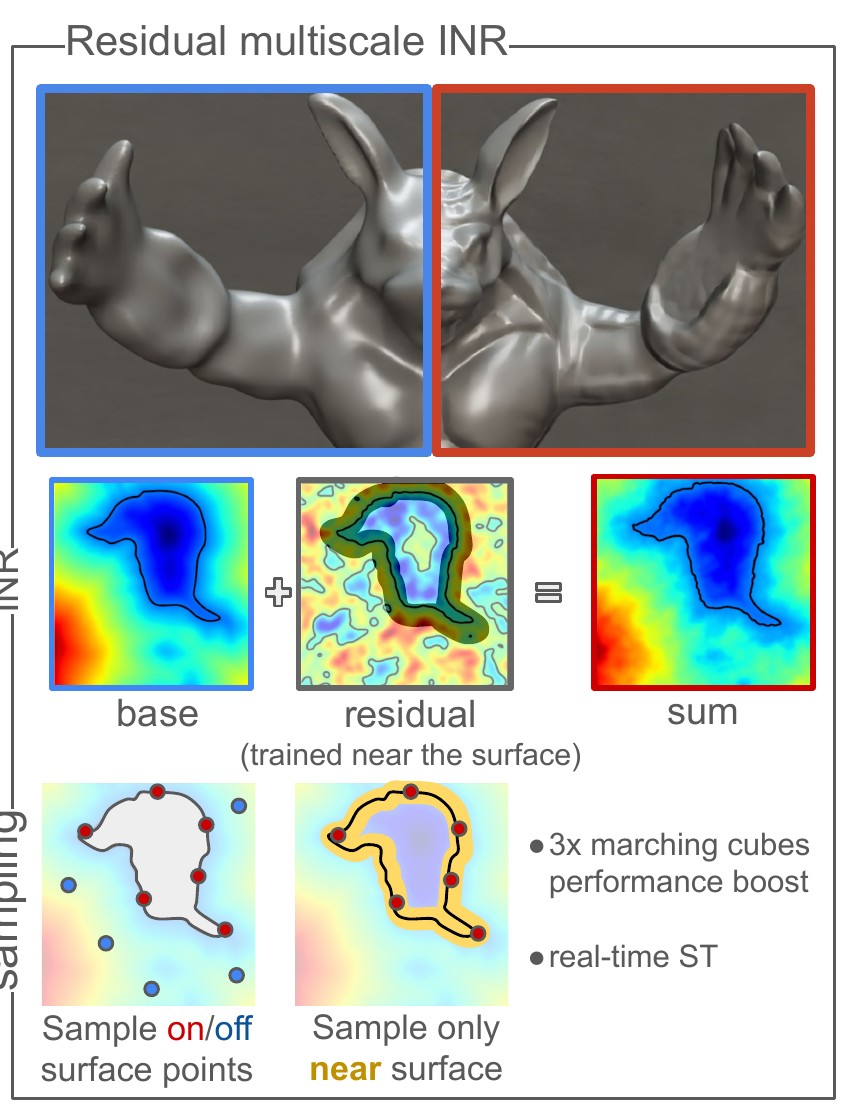
The representation is a sum of small networks. Each one after the first is trained inside a thin, shrinking band around the previous surface, so the noise living off-surface is never fitted.

Video 1. Two-minute walkthrough of the method, animated by Matheus Bessa. Sound on.
Residual multiscale representation: base plus residual equals sum; sampling only near the surface
1

A compact base network captures the coarse shape

Band-limited by design, it cannot fit high-frequency noise in the first place.

2

Residual networks refine it, inside nested bands

Each residual is supervised only where the previous surface already is. Off-surface noise is outside the band, so it is simply never seen.

3

Every partial sum is a valid signed distance function

Coarser prefixes are levels of detail for free, and the nesting is an invariant the renderer can rely on.

Sampling only near the surface is also what makes it fast: culled marching cubes extract up to 5× faster and multiscale sphere tracing runs in real time. The details are in the paper.
Results

Eight shapes, one noisy scan each. Switch the method.

Every reconstruction below was trained on a scan with 1% noise. Flip between what the methods were given and what they produced.

Rendered from the paper's reconstructions with identical cameras. Comparisons against BACON, IDF and screened Poisson are in the paper.
Video 2 · Results

The same scans, in motion.

Turntables of the noisy input, iNGP and M-plicits, with a synchronized magnifier.
Real time

Rendered live, not extracted.

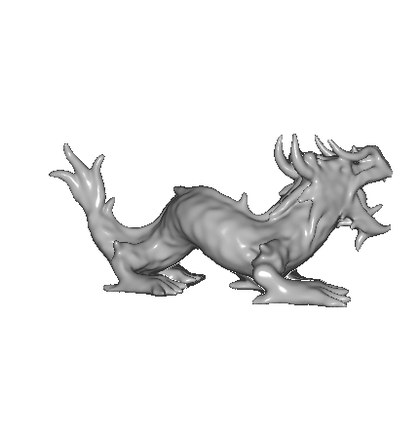
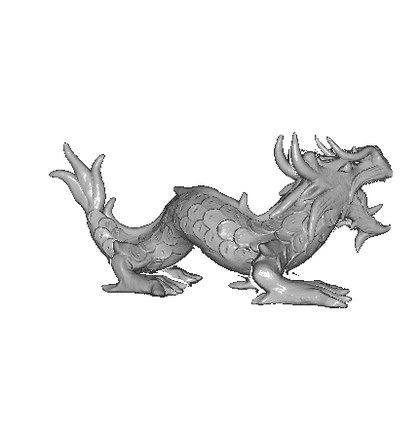
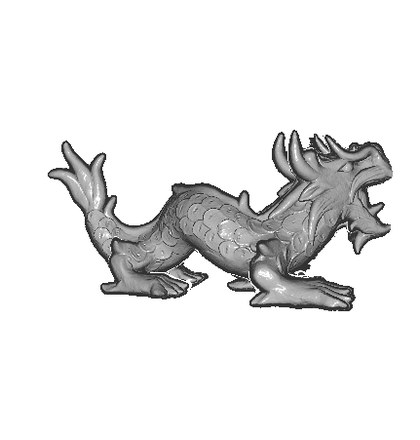
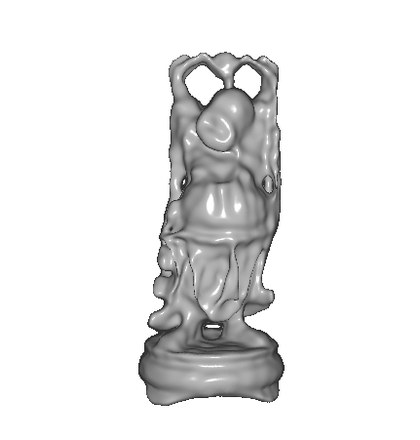
The nesting guarantees the renderer cannot miss the surface: multiscale sphere tracing, analytical normals via GEMMs, and normal and texture mapping run from the compact model directly. These are frames from the CUDA renderer, not extracted meshes.

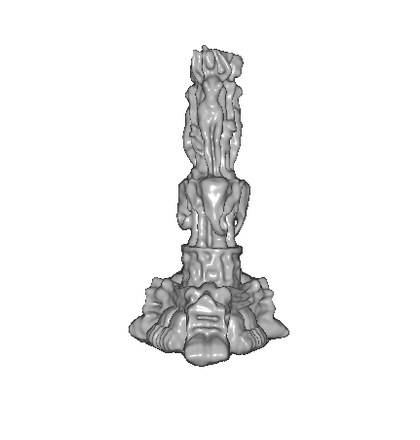
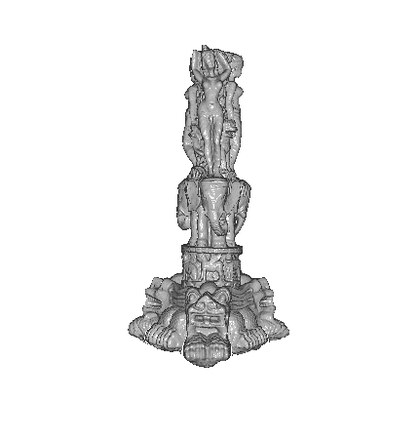
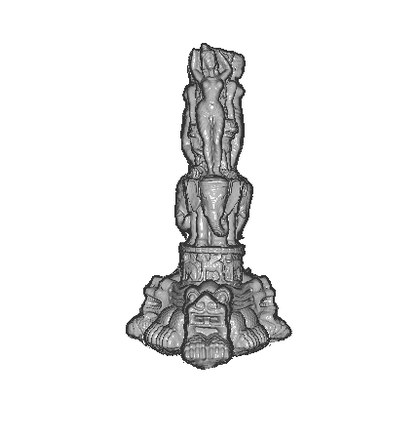
Thai statue, coarse levelThai statue, full detailThai statue, neural normal mapping
Thai statue
Asian dragon, coarse levelAsian dragon, full detailAsian dragon, neural normal mapping
Asian dragon
Buddha, coarse levelBuddha, full detailBuddha, neural normal mapping
Buddha
Textured vase, neural texture mapping
Vase · neural texture mapping
Sphere tracing with 20 iterations on the coarse SDF and 5 with each residual level added.
Resources

BibTeX

@inproceedings{silvamplicits2026,
  title     = {M-plicits: Neural Implicit Surfaces via
               Nested Multiscale Residuals},
  author    = {Silva, Vin{\'\i}cius da and Melo, Isabelle and Bessa, Matheus and
               Schardong, Guilherme and Schirmer, Luiz and Ara{\'u}jo, Andr{\'e} and
               Gon{\c{c}}alves, Nuno and Lopes, H{\'e}lio and Raposo, Alberto and
               Velho, Luiz and Novello, Tiago},
  booktitle = {Advances in Neural Information Processing Systems},
  year      = {2026}
}
NeurIPS40th Conference on Neural Information Processing Systems (NeurIPS 2026)